
How to Clean Photo Frames (Glass, Wood & Prints) Without Damaging Them
27 Nov 2026 · Artwani
A frame on the wall is easy to forget. It just sits there, doing its job, while dust settles on it a little bit every day. Then one afternoon the light hits it at an angle and you realise the glass is hazy, the wood looks dull, and the print — the thing you actually bought it for — looks a shade paler than you remember.
The good news: cleaning a frame takes about five minutes, and most of the damage people do to frames happens in those five minutes, with the wrong cloth or the wrong cleaner. Get the method right and a ₹499 frame looks new for years.
The glass or acrylic front: what to use, what never to use
This is the part most people get wrong, so let's start here.
First, take the frame down and lay it flat, face up. Cleaning a frame while it's hanging means drips running down the print and cleaner pooling at the bottom edge. Two minutes of effort, and you avoid the most common mistake.
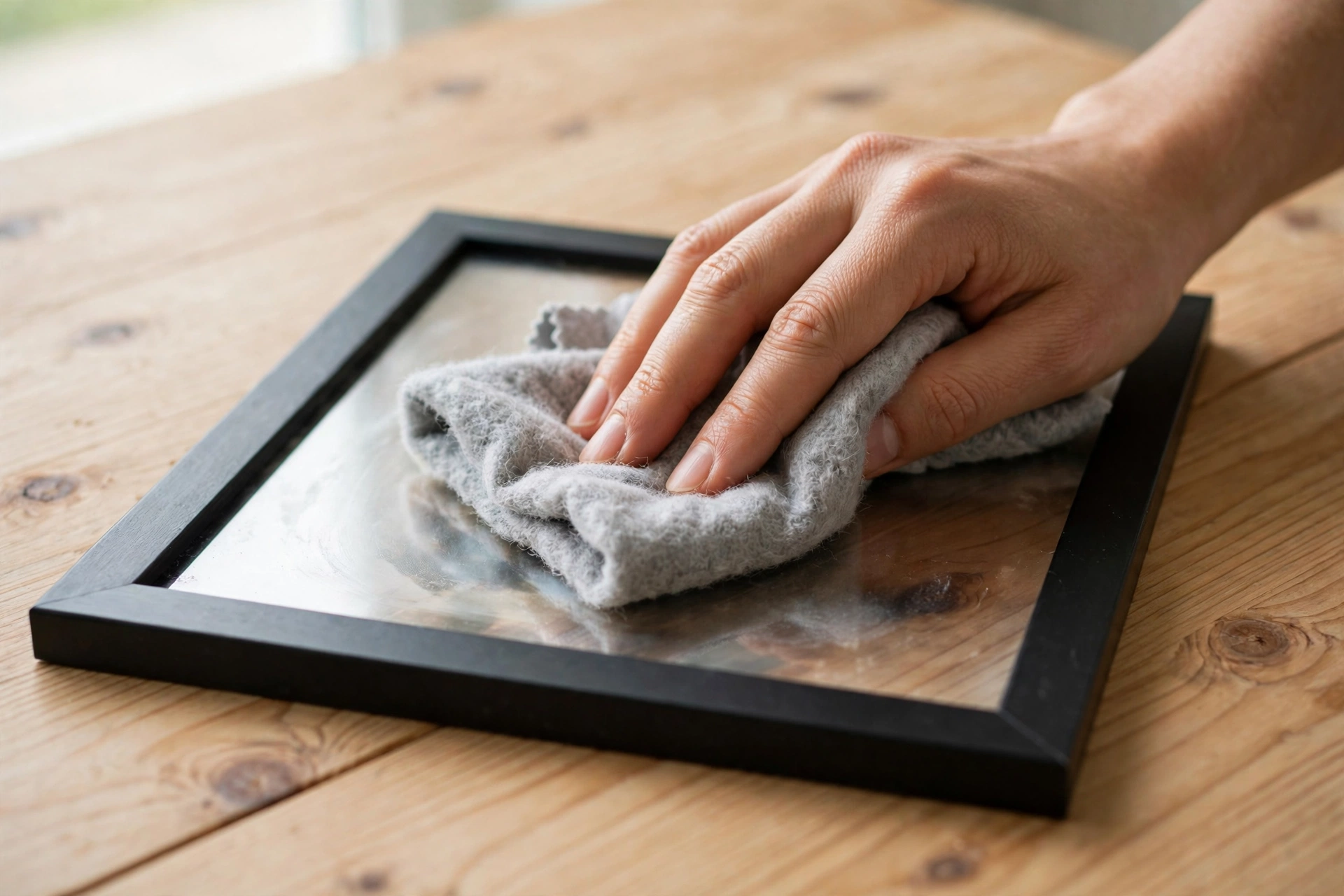
For the front, use a soft, dry microfibre cloth — the kind you use for spectacles or a phone screen. Wipe in slow circles. That alone removes most dust. If there's a smudge or a fingerprint, breathe lightly on the front and wipe again, or dampen one corner of the cloth with plain water. That's usually enough.
What never to use: paper towels and old newspaper. Both are rougher than they look and leave fine scratches that build up over months until the front looks permanently hazy. And never spray cleaner directly onto the front — spray it onto the cloth instead, so nothing seeps under the edge and onto the print.
One more warning, and it matters: never use an ammonia-based glass cleaner on an acrylic front. Ammonia clouds acrylic and the damage doesn't come off. If you're not sure whether your frame's front is glass or acrylic, play it safe — plain water on a microfibre cloth works on both. The rule is simple: if you wouldn't clean your spectacles with it, don't clean your frame with it.
Wooden frames: dust first, damp second
Wooden frames — the warm finish that suits most Indian living rooms — need less cleaning than people think, and gentler cleaning than people do.
Start with a dry, soft cloth or a feather duster. Dust is the main enemy, and dry dusting removes it. Do this once a month and the frame stays clean most of the time.
If the wood looks dull or has a mark, wipe it with a cloth that's barely damp — wrung out until it's almost dry — then immediately dry it with a second cloth. Wood and standing water don't mix. Never soak the cloth, never leave the frame wet, and never use furniture polish unless you're sure it's meant for the finish. Most polish leaves a film that attracts more dust than it removes, which is the opposite of what you want.
And keep wooden frames out of the kitchen. Cooking steam and oil settle on wood faster than anywhere else in the house. If a frame is above the dining table, it needs dusting twice as often as one in the bedroom.
The print: keeping colours from fading
The print is the part you can't clean back to life, so this section is really about prevention.
Sunlight is the biggest enemy. A frame hanging opposite a window, getting direct sun for a few hours a day, will fade noticeably within a year or two — and no cleaner fixes that. If the wall opposite a big window is the only option, hang the frame where the sun doesn't hit it directly, or draw the curtain during the harshest afternoon hours. A frame on a shaded wall keeps its colours for years longer than one in direct sun.
Humidity is the second enemy, and Indian summers are not kind. A frame in a damp room — near a bathroom, or on a wall that gets damp in the monsoon — can develop spots or a musty smell behind the front. If a wall feels damp, don't hang a frame there. Pick another wall, or wait for the dry season. And never hang a frame on fresh paint less than a month old; the paint can stick to the back and peel when you take it down.
The honest truth: you can't stop fading completely. But a frame kept out of direct sun and away from damp walls looks the same in three years as it did on day one, and that's most of the battle.
The 2-minute yearly check (do it once a year)
Frames fall for boring reasons, and the boring reasons are preventable. Once a year — pick a date, say Diwali cleaning — spend two minutes per frame.
Take it down. Look at the back. If it's hanging on adhesive strips, check that every strip is still stuck flat — if a corner is lifting, replace the strip rather than pressing it back and hoping. If it's on a hook, check the hook is still firmly stuck and the frame's hanging point is sound. Give the frame a gentle shake: if anything rattles, the backing has loosened, and it's worth opening the back and reseating it.
Then wipe the front, dust the frame, and hang it back — same spot, same height, centre at eye level (145–150 cm from the floor). Two minutes, once a year, and the frame never falls at 2 in the morning.
This is also the moment to check whether the frame is still in the right place. Tastes change, rooms change. A frame that suited the bedroom two years ago might suit the study now. Moving a frame is free, and it's the cheapest decor change in the house.
What if a frame arrives damaged?
Sometimes the problem isn't cleaning — it's the delivery. A corner bent in transit, a crack in the front, a print that's wrong.
Don't try to fix it yourself, and don't hang it and hope nobody notices. Take a photo of the damage — a quick video while opening the box helps too, if you think of it — and contact Artwani. There's a 7-day replacement for damaged or wrong items, so the sooner you report it, the faster the replacement ships. Keep the box and the packaging until the replacement arrives; it makes the return much simpler.
One thing to know: customised frames are made just for you, so they can't be returned for a change of mind — only if they arrive damaged or incorrect. That's fair, and it's worth knowing before you order, not after.
FAQ
Can I use glass cleaner on my photo frame?
On a glass front, yes — sprayed onto a cloth, never directly onto the frame. On an acrylic front, never use ammonia-based cleaner; it clouds the acrylic permanently. If you're not sure which one you have, use plain water on a microfibre cloth.
How often should I clean my frames?
Dust once a month, deep-clean the front every few months. The yearly 2-minute hanging check matters more than frequent cleaning.
My print looks faded — can I fix it?
No, fading can't be reversed. Move the frame out of direct sunlight so it doesn't get worse, and keep the next one on a shaded wall from the start.
Is it safe to hang frames in a bathroom?
Not really. Steam and humidity shorten the life of the print and the adhesive. If you must, pick a spot far from the shower and expect to replace the strips more often.
What's the best cloth for cleaning frames?
A soft microfibre cloth — the same kind you'd use for spectacles. Never paper towels or newspaper; they scratch.